Yes, you can charge an electric car from a three-pin plug in 2026. Most electric vehicles can use a portable Mode 2 cable, commonly called a granny charger, through a standard UK household socket.
However, “can” does not always mean “should”.
A three-pin charger can be useful as a temporary solution, while travelling, or for the occasional top-up. If you drive every day, rely on overnight charging, or want to benefit fully from smart tariffs, a dedicated electric car charger installation is usually the more practical and convenient choice.
Here is the honest comparison.
How fast is a three-pin granny charger?
A typical granny charger draws around 10 amps, delivering approximately 2.3kW. Depending on your car’s efficiency, that might add roughly 6–10 miles of driving range per hour.
A dedicated home wallbox usually supplies up to 7.4kW on a single-phase domestic connection. In real-world terms, that can add approximately 20–30 miles of range per hour.
| Charging method | Typical power | Approximate range added per hour | Best suited to |
|---|---|---|---|
| Three-pin granny charger | About 2.3kW | 6–10 miles | Occasional or emergency charging |
| Dedicated 7kW home charger | Up to 7.4kW | 20–30 miles | Regular overnight charging |
| Public rapid charger | 50kW or more | Varies significantly | Long journeys and quick top-ups |
The difference becomes obvious when you consider a larger battery. Adding 30 miles overnight with a granny charger could take several hours. A 7kW charger can normally replace that energy much faster, giving you a full or substantial charge while you sleep.
Our home EV charger installation service is designed around how you actually use your car, rather than simply fitting the cheapest possible equipment.
Is charging from a three-pin socket more expensive?
Not necessarily. The electricity itself costs the same per kilowatt-hour whether it enters your car through a granny charger or a wallbox.
For example, if your EV uses 3.5 miles per kilowatt-hour and your electricity costs 26p per kilowatt-hour, the energy cost is approximately 7.4p per mile. The charging equipment does not automatically change that calculation.
There are, however, some practical differences:
- A granny charger can have slightly higher charging losses because charging takes longer.
- You may be more likely to use public rapid chargers if home charging is too slow.
- A smart wallbox can help you schedule charging for cheaper periods automatically.
- A dedicated charger makes it easier to charge consistently at home, reducing the temptation to use expensive public chargers.
The biggest potential saving often comes from the tariff rather than the socket. With a compatible smart charger, you can schedule charging around off-peak electricity prices. A three-pin cable has no built-in tariff control, although some compatible cars can be managed through their own software.
Is it safe to charge an EV from a normal socket?
It can be safe when the equipment and electrical installation are suitable, but a standard socket is not automatically ideal for several hours of continuous high load.
UK household sockets generally comply with the BS 1363 standard and can be rated up to 13 amps. However, EV charging is a sustained load, often lasting throughout the night. That is different from briefly using a kettle, vacuum cleaner or hairdryer.
Potential problems include:
- Heat building up in an old, loose or damaged socket
- Overheating at the plug or faceplate
- An overloaded circuit if other high-power appliances share it
- Inadequate protection at the consumer unit
- Unsafe use of extension leads, adapters or cable reels
You should never use an extension lead or multi-way adapter for EV charging. The portable charger should connect directly to a suitable, fixed wall socket, with the cable kept away from standing water and trip hazards.
Electrical protection also matters. EV charging circuits need appropriate residual-current protection, such as suitable RCD or RCBO protection. The installation may also need to address DC fault currents and protective neutral-earth, or PEN, fault protection, depending on the property’s electrical arrangement.
If you intend to use a three-pin charger regularly, ask a qualified electrician to assess the socket, circuit and consumer unit. Do not assume that because a socket powers other appliances, it is suitable for continuous EV charging.
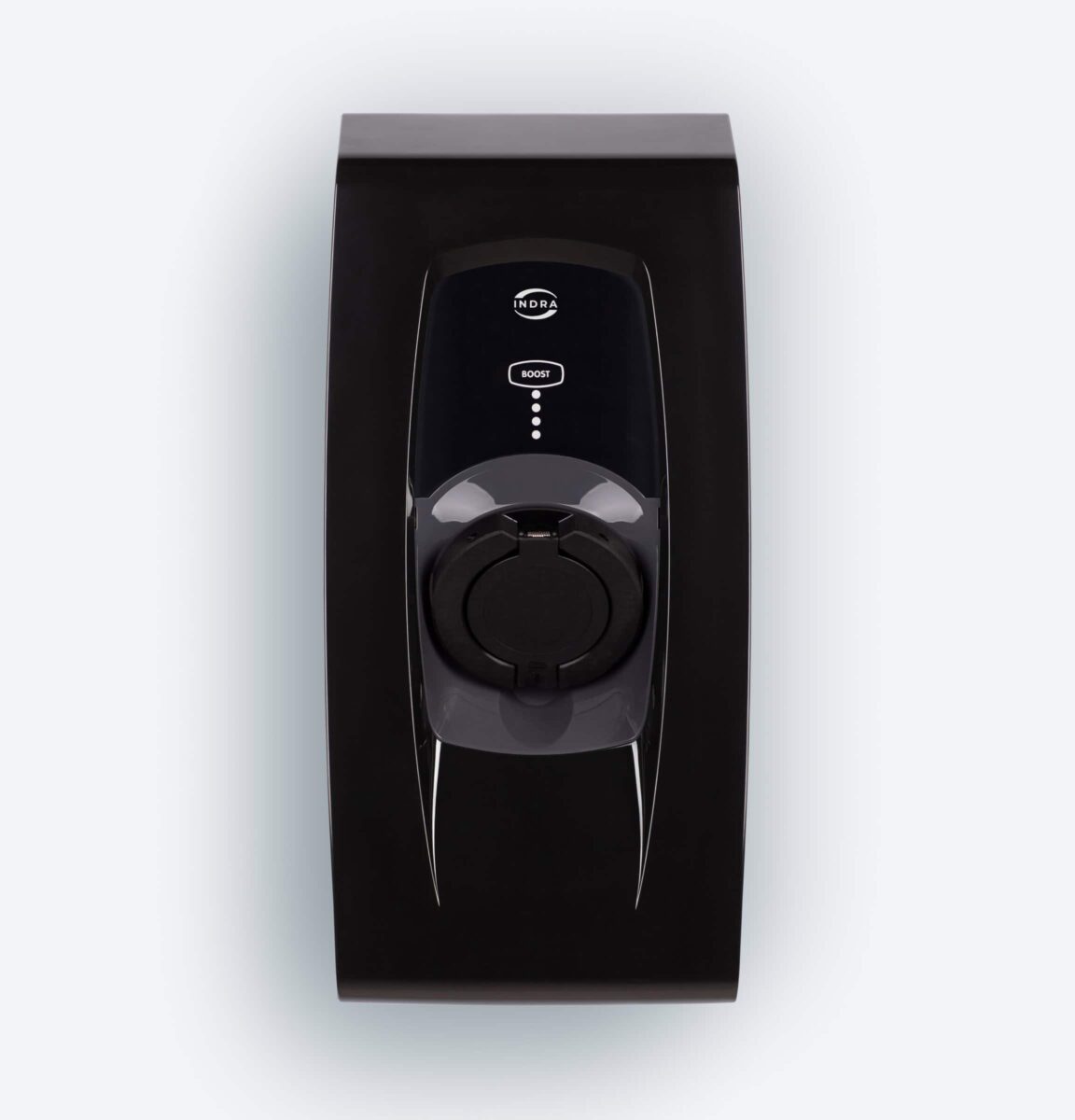
A dedicated wallbox installation gives you a properly assessed circuit, purpose-designed protective equipment and a charger built for regular use.
Three-pin charging and the 2021/2025 smart charging rules
The UK’s Electric Vehicles (Smart Charge Points) Regulations 2021 require relevant new private charge points sold for domestic or workplace use in Great Britain to include smart functionality.
The regulations cover features such as:
- The ability to send and receive information
- Demand-response capability
- Preset off-peak charging hours
- Randomised delay functions
- Energy measurement
- Cybersecurity and safety provisions
The regulations also refer to “smart cables”, but a normal non-smart granny cable is not the same as a connected wallbox. The government guidance confirms that non-smart cables are outside the scope of these particular requirements.
For homeowners, the practical point is simple: a standard three-pin charger is a slow power supply, not a smart charging system. It normally cannot communicate with your energy supplier, monitor your home’s energy demand or respond intelligently to tariff signals.
There has been discussion around possible technical amendments following the 2021 regulations, but that should not be confused with a ban on using a three-pin charger. You can still use a suitable granny charger in 2026. The question is whether it gives you the speed, control and convenience you need.
What about Octopus Energy EV charging?
This is where the answer needs a little nuance.
A granny charger itself is not a smart charger. It cannot independently respond to Octopus Energy’s instructions or change its charging rate through an app.
However, Octopus explains that Intelligent Octopus Go can pair directly with either a compatible car or a compatible charger. If your vehicle is officially supported, Octopus may be able to control charging through the car’s software, even if the electricity is supplied through a three-pin cable.
That means a compatible car may allow you to use Intelligent Octopus Go with a granny charger. But the smart control comes from the vehicle API, not from the three-pin charger.
If your car is not compatible, a granny charger will not unlock Intelligent Octopus Go on its own. You may still be able to use a tariff such as Octopus Go, subject to the supplier’s current terms, but you will not have the same charger-side control.
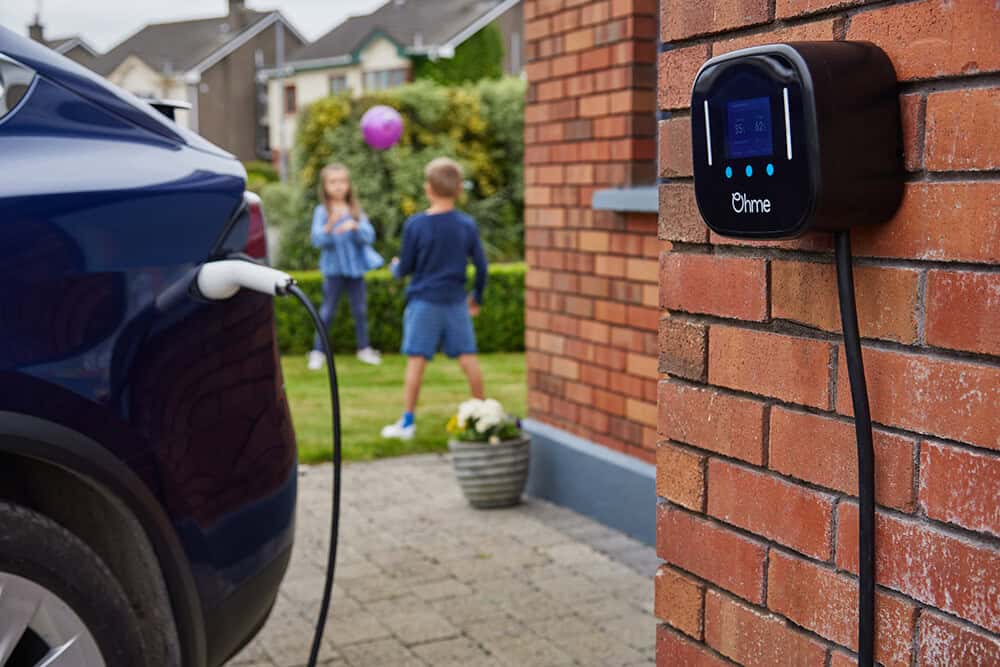
A compatible smart wallbox, such as an Ohme Home Pro, is a more dependable option if smart scheduling is important to you. Other suitable choices can include chargers from Myenergi, Andersen, EO, Ratio and other leading manufacturers, depending on current tariff compatibility.
When does a three-pin charger make sense?
A granny charger can be perfectly reasonable in certain situations.
It may suit you if:
- You only drive a few miles a day
- You have access to another regular charging option
- You are charging temporarily before arranging an installation
- You are visiting family or staying somewhere without a wallbox
- You need a backup option for holidays or emergencies
- You are a plug-in hybrid owner with a relatively small battery
It can also be useful while you are waiting for your new home charger to be installed. At EV Power Point, we can often complete an installation within as little as five days after providing a fixed-price quote, subject to equipment availability and the installation requirements.
When is a proper home EV charger installation the better option?
A dedicated charger is usually the sensible choice if you:
- Drive every day or cover significant mileage
- Want to charge reliably overnight
- Need to add range quickly between journeys
- Want app control and scheduled charging
- Use solar panels or plan to install them
- Want a tidy, permanent charging point on your driveway
- Are hoping to make the most of a smart EV tariff
- Have more than one EV at home
A 7kW smart charger will not necessarily reduce the energy price on its own. What it does provide is speed, control and a safer, purpose-designed installation. It also saves the regular inconvenience of running a portable cable from a household socket whenever you need to charge.
Three-pin plug or wallbox: which should you choose?
| Your situation | Our honest recommendation |
|---|---|
| Occasional charging or emergency backup | A manufacturer-supplied granny charger may be enough |
| Low annual mileage and another charging option available | Three-pin charging could work |
| Daily driving and regular overnight charging | Arrange a dedicated 7kW home EV charger installation |
| You want Intelligent Octopus Go | Check car compatibility, or choose a compatible smart charger |
| You have solar panels | Consider a solar-compatible charger such as Myenergi Zappi |
| You want the tidiest, simplest routine | Choose a fixed wallbox with professional installation |
There is no need to install the most expensive charger available. The right choice depends on your car, mileage, parking position, electricity tariff, solar setup and budget.
At EV Power Point, we are a family-run team based in Redditch, serving Worcestershire, Warwickshire and the West Midlands. Our engineers are directly employed, manufacturer-trained and never subcontracted. We provide fixed-price installations without hidden fees or a hard sell, and we fit all major charger brands.
If spreading the cost would help, our EV charger finance options include a 12-month, 0% interest payment plan, subject to approval and the provider’s terms.
The bottom line
Yes, you can use a three-pin plug to charge an EV in 2026. It is not automatically unsafe, illegal or unsuitable for every driver.
But it is slow, offers no charger-side smart control and places a long continuous load on a general-purpose household socket. For occasional use, it can be a useful backup. For everyday driving, a properly designed electric car charger installation is faster, tidier and more convenient.
If you are unsure, start with your daily mileage and charging routine. We can then advise you honestly on whether a granny charger is sufficient or whether a fixed 7kW home charger would make life easier.
Request a fixed-price EV charger installation quote.
SEO metadata
- Focus keyphrase: electric car charger installation
- Secondary keywords: home EV charger installation, Octopus Energy EV charging, granny charger, three-pin EV charger, 3-pin plug EV charging, 7kW home EV charger, smart EV charger installation, EV charger safety UK
- Meta description: Can you charge an EV from a three-pin plug in 2026? We compare granny chargers with electric car charger installation, covering speed, safety, costs, smart tariffs and Octopus Energy.
- Slug:
three-pin-plug-ev-charging-vs-electric-car-charger-installation-2026 - Yoast title: Three-Pin EV Charging vs Electric Car Charger Installation 2026
- Alt tag: Electric car charger installation compared with three-pin granny charger charging