Choosing a home EV charger in 2026 is less about finding the fastest box on the wall and more about finding the charger that fits your car, home, energy tariff and daily routine.
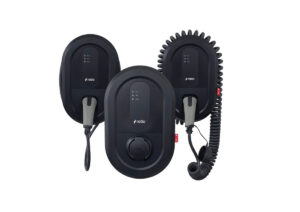
The Ratio EV charger and Ohme Home Pro are both smart 7kW charging options, but they take slightly different approaches. Ohme is particularly strong for automatic tariff integration, while Ratio offers flexible hardware, app control and impressive solar and load-management options.
For clarity, this comparison focuses on the Ratio io6 Pro, the compact Ratio model most relevant to domestic and small workplace installations. The larger Ratio io7 is a free-standing dual-socket charger designed primarily for commercial and destination charging, so it is not a direct rival to the wall-mounted Ohme Home Pro.
Ratio io6 Pro vs Ohme Home Pro: At a Glance
| Feature | Ratio io6 Pro | Ohme Home Pro |
|---|---|---|
| Typical UK charging speed | Up to 7.4kW single-phase; 22kW three-phase versions available | 7.4kW, 32A single-phase |
| Cable connection | Socketed or 7.5m tethered options | 5m tethered Type 2 cable as standard; 8m upgrade available |
| App control | Ratio App with scheduling, monitoring and access control | Ohme app with scheduling, tariff integration, usage monitoring and solar controls |
| Connectivity | Wi-Fi, Ethernet or 4G | Built-in 4G multi-network SIM |
| Solar compatibility | Yes, using the Ratio App and optional Sensor Box hardware | Yes, using Solar Boost and a CT clamp where fitted |
| Octopus Go | Can be scheduled around off-peak periods | Compatible |
| Intelligent Octopus | Check the current Octopus compatibility list before buying | Native integration is a major selling point |
| Build | Durable polycarbonate housing, UV protected and flame retardant | Compact casing, IP55 rated, with built-in LCD screen |
| Warranty | 3 years | 3 years |
| Best suited to | Flexible home, workplace or multi-charger setups | Homeowners wanting simple, automated smart-tariff charging |
Both chargers are capable of delivering a full overnight charge for most electric cars. In a typical UK home, the limitation is usually the car’s onboard charger and the property’s electrical supply: not whether the wallbox says 7.4kW or 7.2kW on the specification sheet.
Design & Build Quality
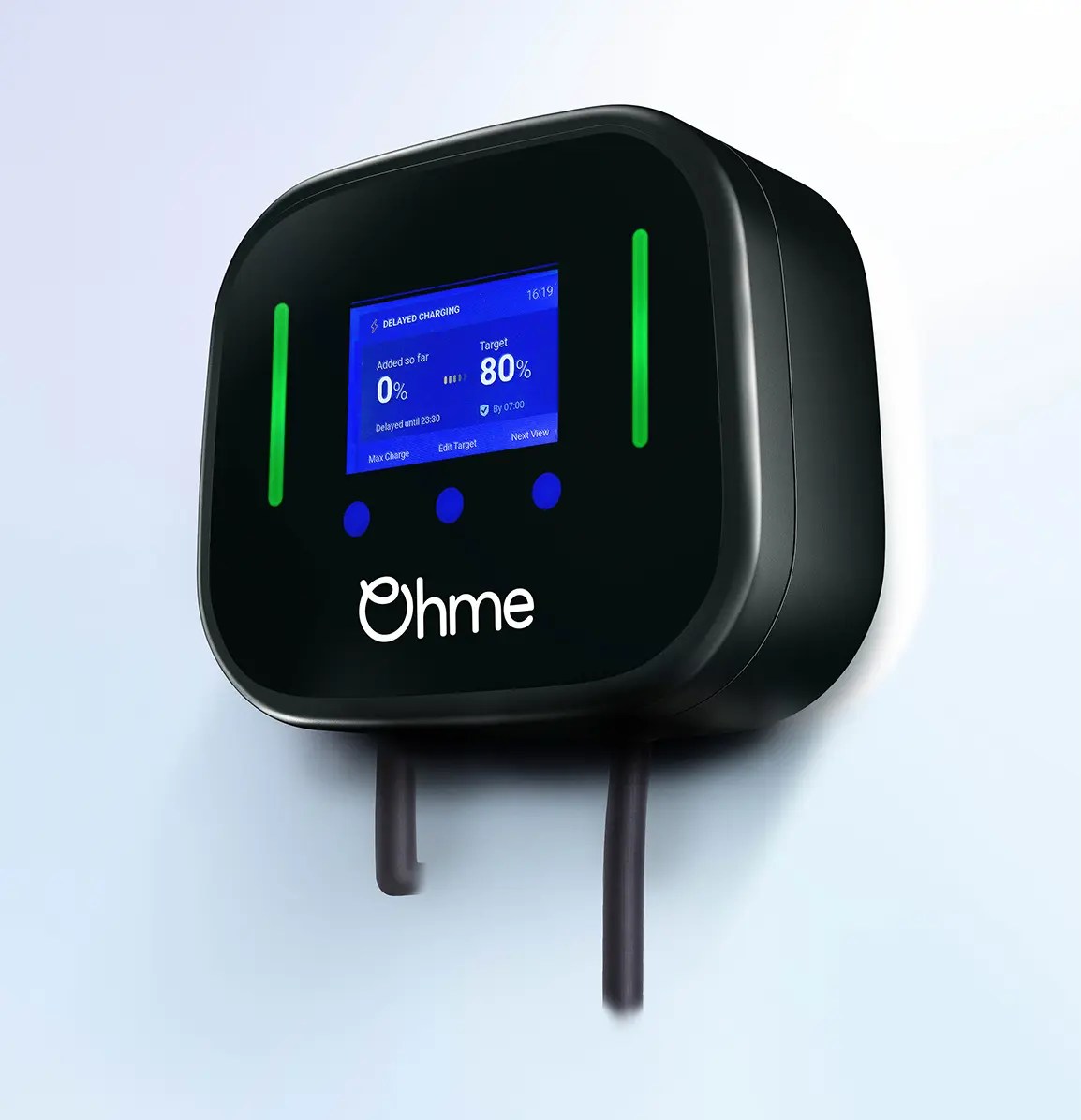
The Ohme Home Pro is small, tidy and deliberately domestic. It measures approximately 170mm high by 200mm wide and 100mm deep, weighs around 4kg and has an IP55 weather-resistance rating. The built-in screen is a useful touch if you like seeing charging information without reaching for your phone.
It comes with a permanently attached Type 2 cable, which means you simply plug in and go. That is wonderfully convenient, although the cable does need somewhere to live when it is not connected. The standard 5m cable works well for most driveways, while an 8m version is available if your parking arrangement is a little more “creative”.
The Ratio io6 Pro has a more flexible design. It is available as a socketed charger, allowing you to use your own Type 2 cable, or as a tethered version with a 7.5m cable. The socketed option keeps the installation looking cleaner when the charger is not in use, while the tethered option is quicker for everyday charging.
Ratio uses a durable polycarbonate housing designed to be impact resistant, UV protected and flame retardant. It also includes built-in cable storage on relevant configurations and a simple LED charging indicator.
Our view? Choose Ohme if you want a compact wallbox with a screen and a cable always ready to use. Choose Ratio if you value flexibility, a longer tethered cable or a socketed installation.
Smart Features & App
The Ohme Home Pro is designed to make smart charging feel almost invisible. Through the Ohme app, you can start and stop charging, set a target charge level, schedule a one-off session or create regular charging routines.
Its built-in 4G connection is a particularly useful feature. You do not need to rely on your home Wi-Fi signal reaching the garage or outside wall, and the charger can receive software updates over the air. The app also records charging history, energy use and estimated costs.
The Ratio io6 Pro is more configurable, especially where you are managing more than one charger. Its app supports charging schedules, performance monitoring, user access control and Bluetooth commissioning. It can connect through Wi-Fi, Ethernet or 4G, giving installers and site owners more options.
That flexibility makes Ratio particularly interesting for a home with two EVs, a small business or a workplace where you need to control who can use the charger. RFID access and Ratio’s business back-office options can also be useful where charging costs need to be tracked or reimbursed.
For a single home charger, Ohme’s user experience is arguably simpler. Ratio offers more of a “small energy system” approach, which is powerful but may be more functionality than you need to charge one car on a driveway.
Solar & Smart-Tariff Compatibility
This is where the comparison becomes more interesting.
The Ohme Home Pro supports solar charging through its Solar Boost feature. With a suitable CT clamp fitted, the charger can use excess solar generation to help charge your EV while balancing the rest of your household demand. It is not quite the same as a specialist solar-first charger with multiple dedicated charging modes, but it is a useful feature for homes with photovoltaic panels.
The Ratio io6 Pro also supports solar integration. Ratio’s official documentation explains that the charger can work with the Ratio App and optional io6 Pro Sensor Box hardware to monitor building energy use, make better use of renewable generation and dynamically manage available power. This is particularly useful where several chargers share one electricity supply.
For a single home with solar panels, both can be suitable. The key difference is that Ratio’s more advanced dynamic solar and load-management setup may require additional hardware and configuration. With Ohme, the route is generally more straightforward, provided the CT clamp can be installed correctly.
Octopus Go and Intelligent Octopus
Both chargers can be scheduled to charge overnight during cheaper periods on a standard time-of-use tariff such as Octopus Go. However, Intelligent Octopus Go is a different proposition because Octopus needs to communicate directly with a supported vehicle or charger.
The Ohme Home Pro is one of the safest choices if Intelligent Octopus is central to your decision. Ohme provides native tariff integration, allowing Octopus to send charging schedules directly to the charger. You connect the charger through the Octopus app, set your required charge level and departure time, and the system works out when to charge.
The Ratio io6 Pro can schedule charging through its own app, but we recommend checking the current Octopus compatibility information before ordering. Supported devices and integrations can change, and you should not assume that an OCPP-enabled charger automatically has native Intelligent Octopus functionality.
If your car itself is supported by Octopus, you may still be able to use Intelligent Octopus with a Ratio charger through vehicle integration. However, if you want the simplest charger-led experience, Ohme has the clearer advantage.
For more practical tariff guidance, see our guides to choosing a smart EV charger for Octopus Energy and getting the best Octopus EV charging rates.
Home EV Charger Installation
Whichever charger you choose, a proper home EV charger installation involves more than fixing a box to the wall.
Your installer needs to assess the consumer unit, cable route, earthing arrangement, parking position and available electrical capacity. Both Ratio and Ohme include important safety features such as open-PEN protection, but the final installation still needs to be designed and tested correctly.
At EV Power Point, we install both Ratio and Ohme chargers, along with models from manufacturers including Myenergi, Andersen and EO. Our directly employed engineers handle the installation, testing, certification and app setup themselves. No mystery subcontractor appears at your front door armed with a drill and an optimistic estimate.
We are a small family-run team based in Redditch, serving Worcestershire, Warwickshire and the West Midlands. Our comparison advice is relevant across the UK, while our local installation service is built around fixed prices, tidy workmanship and straightforward guidance.
You can learn more about our home and workplace EV charger installation service or see our dedicated Ohme Home Pro installation page.
Price & Value in 2026
Ohme lists the Home Pro from £999 including standard installation, although the final price can vary depending on the property, cable route and any additional work required.
Ratio’s io6 Pro pricing is more configuration-based. The official configurator lists installation, tethered cable, three-phase supply and solar/load-management options separately. For example, installation and optional solar or load-management hardware can add to the base cost, and prices may be shown excluding VAT depending on how the charger is purchased.
That means the cheapest headline price is not always the best comparison. Ask whether your quote includes:
- The charger hardware
- A dedicated circuit and protective equipment
- Cable, clips and trunking
- Testing and electrical certification
- CT clamps or solar hardware
- App commissioning and user handover
- VAT and any expected extras
We provide fixed-price quotations so you know what your installation will cost before booking. If spreading the payment makes more sense, our EV charger finance options include interest-free plans over selected terms, subject to eligibility.
Which One Should You Choose?
Choose the Ohme Home Pro if:
- You want native Intelligent Octopus integration.
- You prefer a permanently attached charging cable.
- You want a built-in screen as well as app control.
- You want a simple, compact home charger with built-in 4G.
- You have solar and want straightforward excess-energy charging.
Choose the Ratio io6 Pro if:
- You prefer a socketed charger or need a longer tethered cable.
- You want flexible Wi-Fi, Ethernet or 4G connectivity.
- You are planning multiple chargers at home or work.
- You need RFID access, energy monitoring or reimbursement features.
- You want more advanced solar and dynamic load-management options.
Our Verdict
For most UK homeowners choosing between these two in 2026, the Ohme Home Pro is the better-value choice if Octopus Intelligent Go is your priority. Its tariff integration is mature, well documented and easy to use.
The Ratio io6 Pro can be the better-value option for flexibility, particularly if you want socketed charging, workplace-style controls, multi-charger management or a more configurable solar setup.
There is no universal winner: and that is rather the point. The best charger is the one that suits your car, tariff, solar system, parking arrangement and budget. If you are unsure, contact EV Power Point for a fixed-price quote. We will talk through the options without the hard sell and recommend the charger that makes sense for your home.